| |
|
|
|
|
How is freestyle sport evolving – and what does this mean for top-level events and snowpark products?
For a long time, freestyle meant one thing above all: breaking existing standards and challenging the status quo. Snowboarding and freeskiing felt like a small revolution for many years. Traditional winter sports formats and institutions were often seen as the opposite of what freestyle stood for. It was about moving differently, thinking differently, and using features in new ways — from urban handrails to creative terrain concepts.
However, a clear counter-trend is now emerging. Looking at the last three Olympic Winter Games, a growing level of standardization becomes visible. Personally, I find this thought-provoking, because standardization is, at its core, the opposite of freestyle. |
|
|
|
Today, the central question is ...
How decisive will course design be in the future for athletic progression and spectator appeal?
In traditional winter sports, this question hardly arises. Bobsleigh tracks, ice rinks, shooting ranges, and ski jumps are standardized and homologated. Even freestyle disciplines such as halfpipe and big air now follow clearly defined norms.
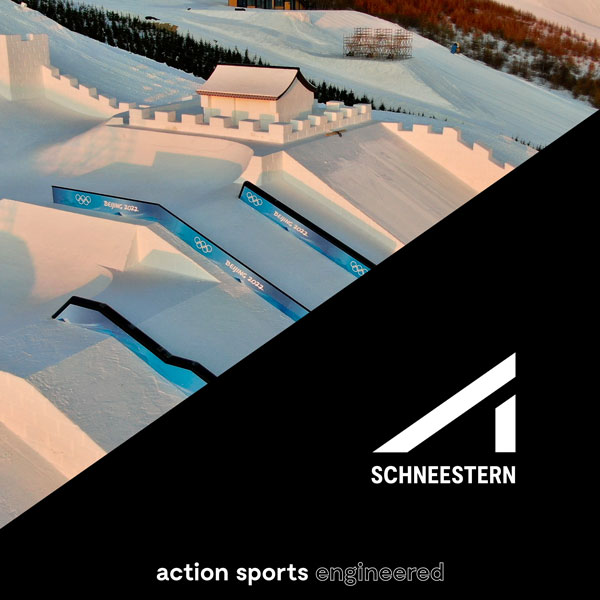
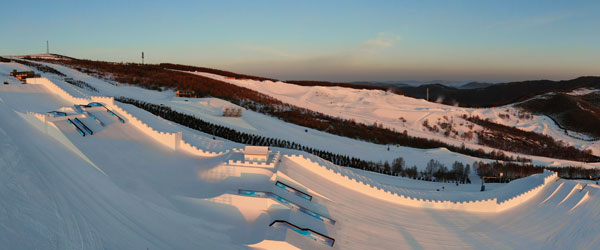
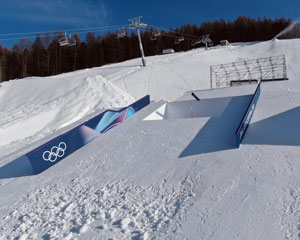
The few disciplines where course designers still play a truly creative role are slopestyle and cross. Here, a course can carry its own signature, be adapted to the terrain, or include storytelling elements — such as the reference to the Great Wall at the 2022 Beijing Games. For the riders, this means every course is new, different, and a unique challenge. |
|
|
|
And that is increasingly becoming the issue
Why? From the perspective of organizers and judges, standardization brings clear advantages. Organizations like the FIS benefit from more efficient operations, reduced costs, and greater predictability. Athlete safety also becomes easier to manage.
The key driver, however, is judging.
So far, we have only been partially successful in systematically integrating creativity, style, and innovative line choices into scoring systems. Instead, many decisions are shifting toward measurable technical execution — similar to figure skating or aerials. The result: fewer options within the course and runs that are easier to compare.
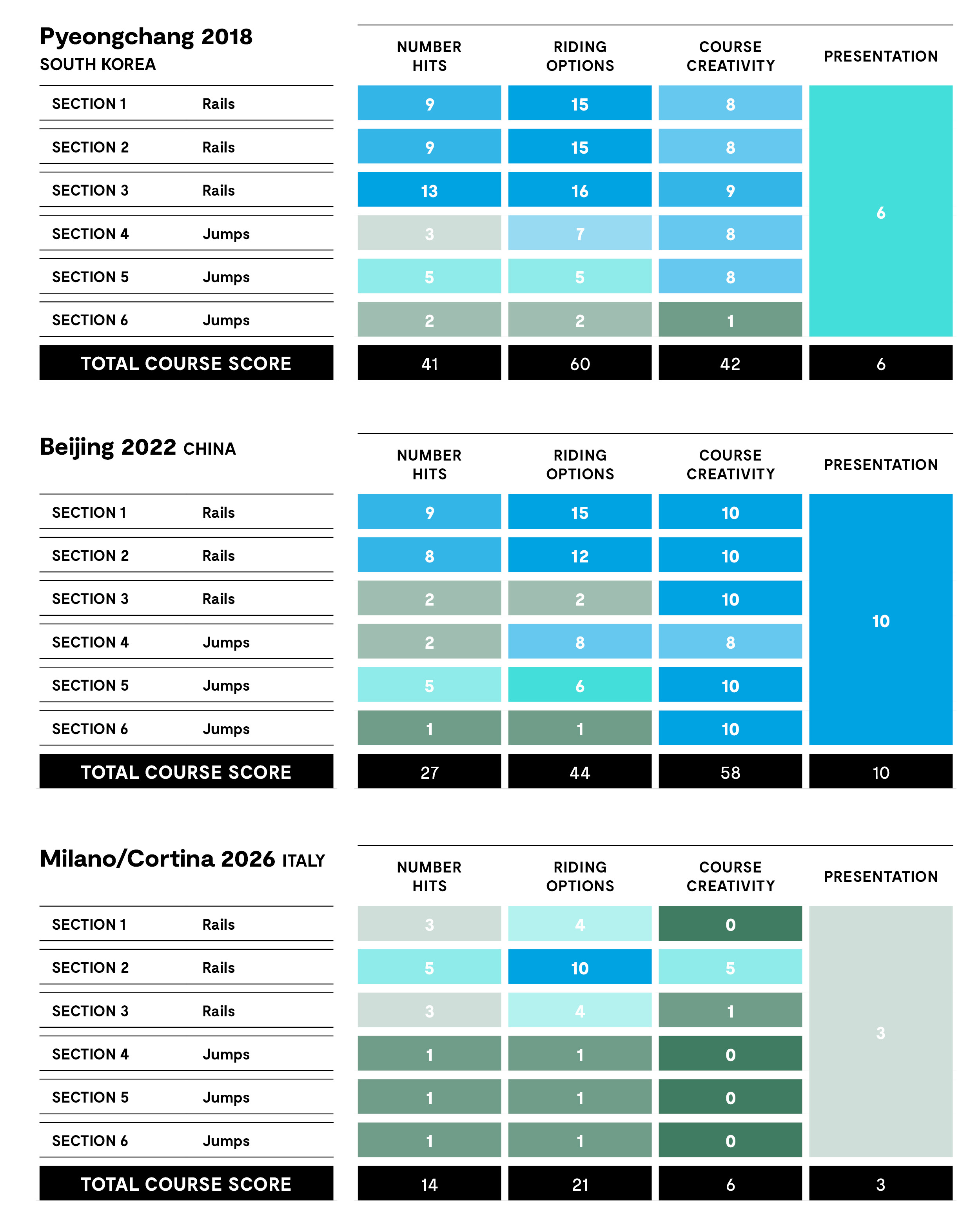
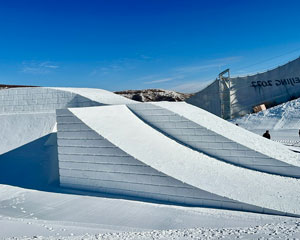
A look at the course layouts from the last Olympic Games clearly shows that both rail variations and jump options have been reduced: |
|
|
|
|
|
- Fewer hits
- Fewer riding options
- Less course creativity
- Less staging
- Less planning effort
|
|
- Greater predictability
- Reliable event implementation
- Lower costs
- Better preparation for athletes
- Greater safety
|
|
|
|
|
|
What does this mean for the athletes?
For riders, standardization primarily brings training reliability. Training centers, summer big-air facilities, and repeatable setups allow for long-term strategies and better competition preparation.
|
|
|
|
What does this mean for resorts and event venues?
If this trend continues, it will become easier for resorts to host top-level events.
Planning and design efforts decrease, snow volumes can be used more efficiently, and modern snow-measurement systems support precise implementation.
At the same time, new opportunities emerge in the training sector: instead of building entire courses, individual standardized sections may be enough for targeted athlete use.
|
|
|
|
|
|
And what does this mean for me personally?
As a park designer, I see creativity in course building as a core source of inspiration. That’s why I find it unfortunate that this freedom is shrinking.
At the same time, I understand the development — and I’m encouraged that the passion for freestyle continues to grow among athletes, users, and spectators alike.
We will continue to contribute to the evolution of freestyle sport — balancing innovation, safety, and progression.
Best regards, Dirk |
|
|
|
What international winter sports events teach ski resorts: trends, standards and best practices
You can find all newsletters in the series at:
|
|
|
|
|
|
|
|
Imprint
Schneestern GmbH & Co. KG · Werner-von-Siemens-Str. 47 · 87471 Durach Phone: +49 831 960 886 10 · E-Mail: info@schneestern.com |
|
Would you like to unsubscribe? Please do so here. |
|
|
|
|